Bussense
When the system works better, the journey does too.
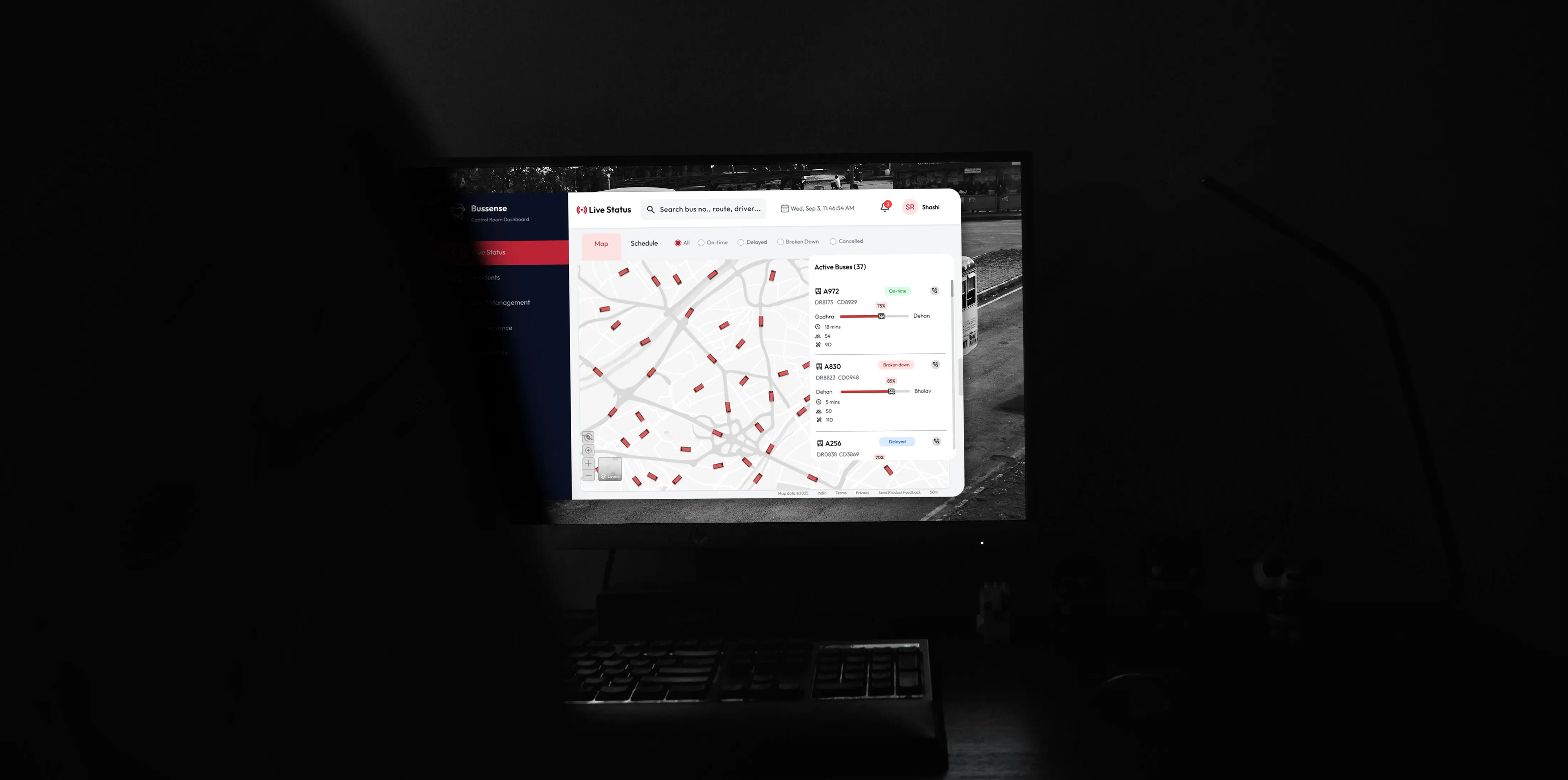
A bus journey is only as reliable as the system behind it.
Public buses look simple from the outside: a bus arrives, passengers get on, and it moves to the next stop. But behind every trip is a much larger system involving drivers, conductors, depot staff, maintenance teams and supervisors.
Schedules have to be assigned, buses have to be monitored, breakdowns have to be handled, staff have to be coordinated, and information has to move between people throughout the day.
The problem wasn’t just with the buses. It was with how the system was connected.
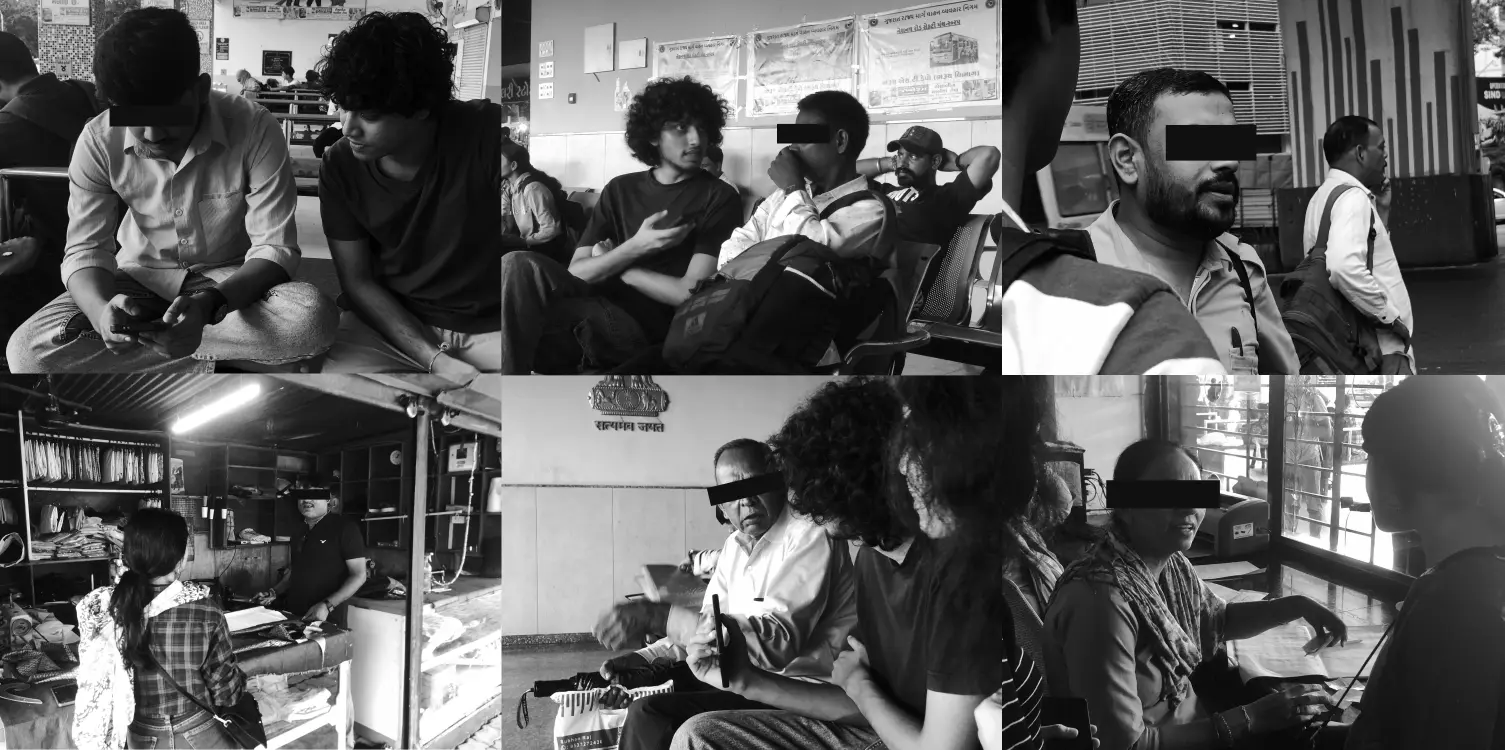
Our research with 22 users across passengers and transport staff revealed that many everyday operations depended on informal communication and manual coordination. Schedules were shared through WhatsApp, breakdowns were reported through calls, and routine information was often recorded or communicated manually.
This created gaps in visibility, coordination and response; problems that eventually became visible to the passenger as delays, uncertainty and disrupted journeys.
Keeping a bus network running means keeping track of a lot more than buses.
Our research showed how many moving parts sit behind a single bus journey. Drivers need schedules, depots need to know where buses are, breakdowns need quick responses, and maintenance has to keep up with the fleet. But much of this information was handled through separate channels and processes. The opportunity became clearer as we mapped these interactions: give the people running the network a shared view of what is happening, and the tools to respond from there.
That thinking shaped the core of Bussense.
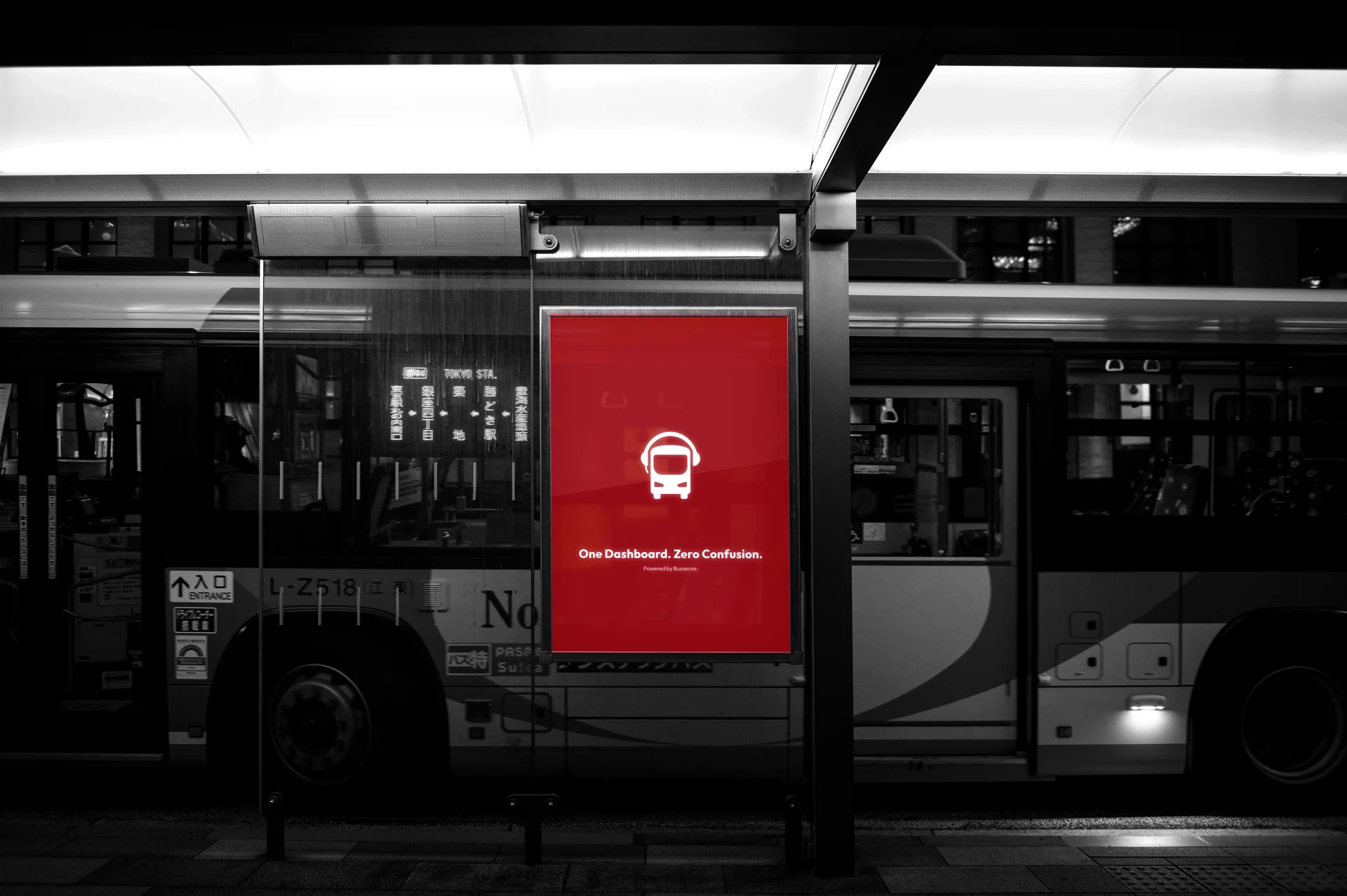
Start with the fleet, and the rest of the operation starts to make sense.
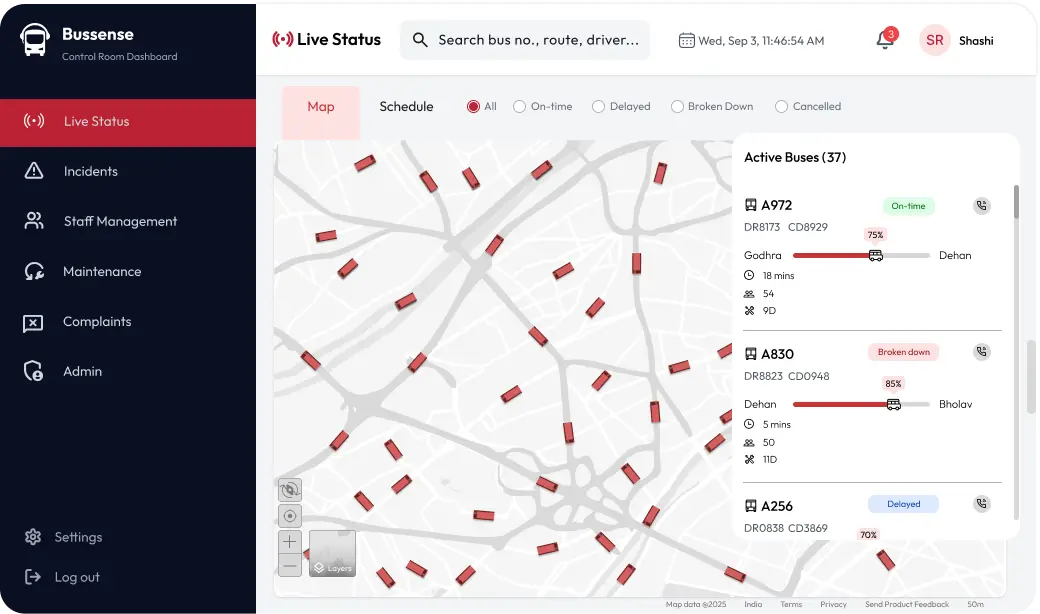
The Fleet Map became the home of Bussense. Instead of treating location, status, crew and maintenance as separate pieces of information, we brought them together around the bus itself. Selecting a bus reveals its current trip, crew, occupancy, ETA and health.
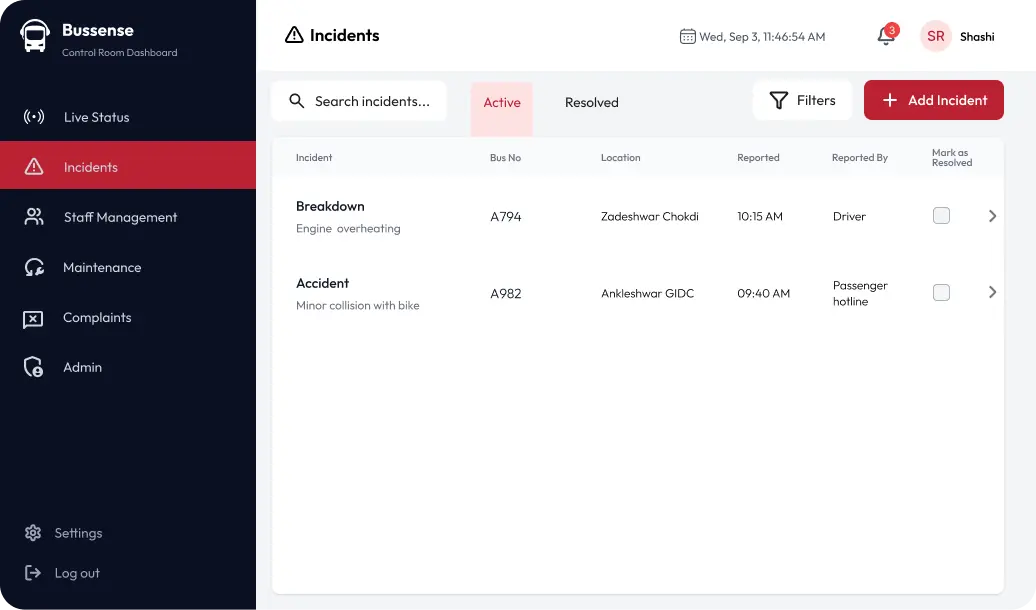
A disruption is easier to handle when everyone can see the same situation.
Breakdowns were often reported through calls, with the response depending on information being passed between people. Bussense turns that moment into a visible incident, showing what happened, where it happened and what can be done next, from dispatching a mechanic to deploying a relief bus.
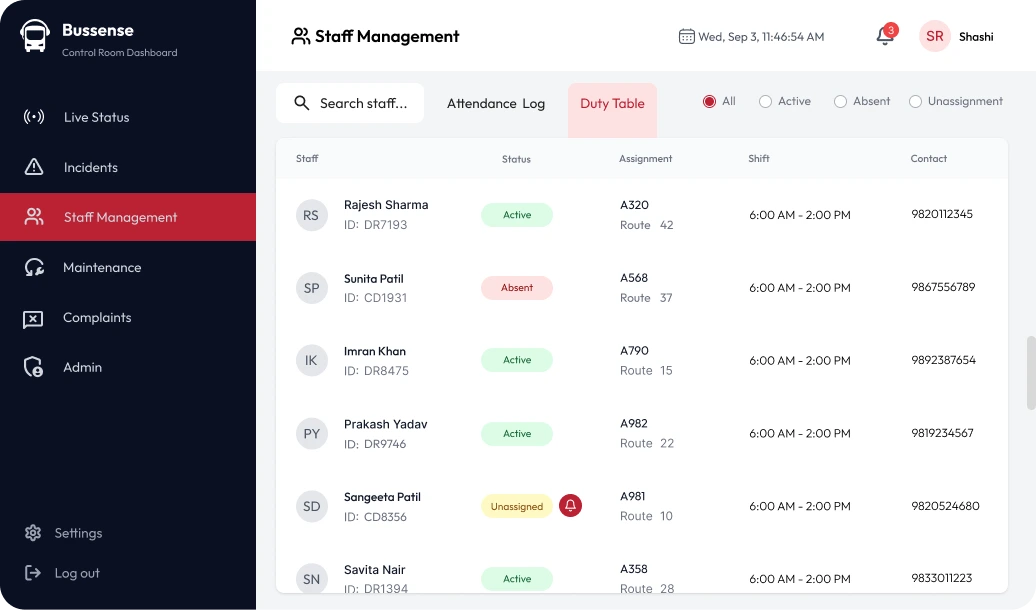
Knowing who is available is just as important as knowing where the buses are.
Driver scheduling was handled through informal channels, making assignments and upcoming duties harder to keep track of. Bussense brings rosters, availability and assignments into one workspace, allowing depot staff to manage the people behind the fleet alongside the buses themselves.
Problems are easier to resolve when they don't get lost after they're reported.
Maintenance faults and passenger complaints were both points where information could move from one person to another without a clear way to track what happened next. Bussense brings reported faults, maintenance alerts and passenger complaints into one place, where they can be assigned, forwarded and tracked through to resolution.
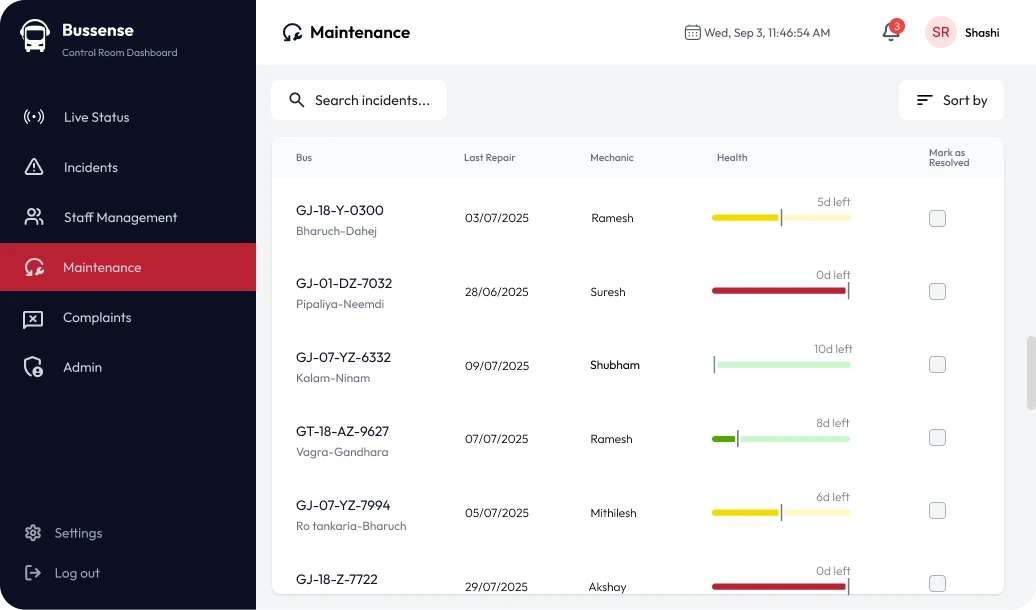
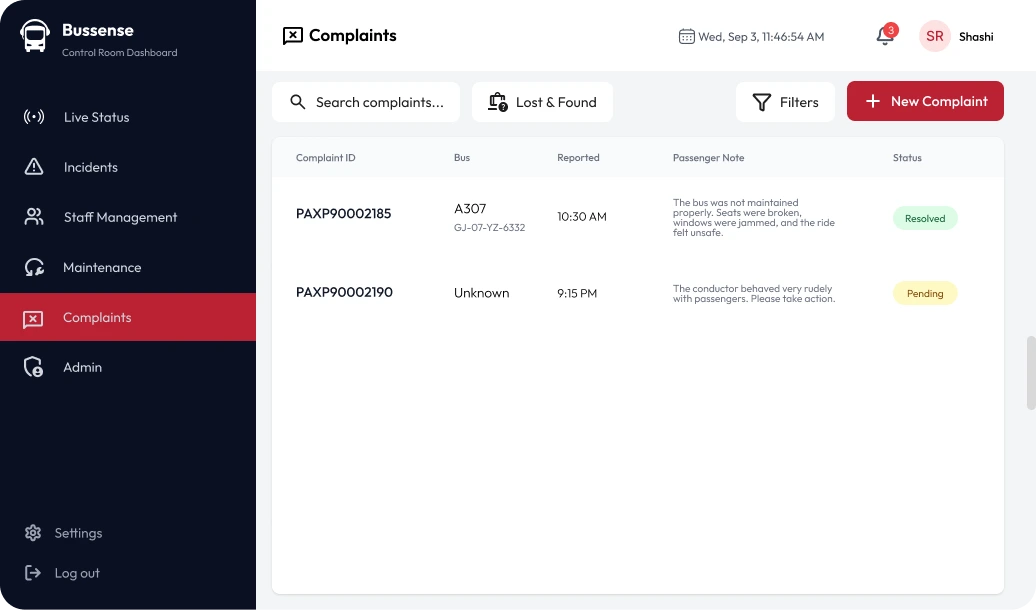
Designing the dashboard was only half the problem. The harder part was deciding what deserved to be visible
Bussense taught me that designing for complex systems isn’t about putting every piece of information on one screen. It’s about understanding what people need to know, when they need to know it, and what they need to do next. Working across fleet operations, staff coordination, incidents and maintenance pushed me to think beyond individual interfaces and design the relationships between them.