Helios
Bringing the messy journey from financial data to investment decisions into one place.
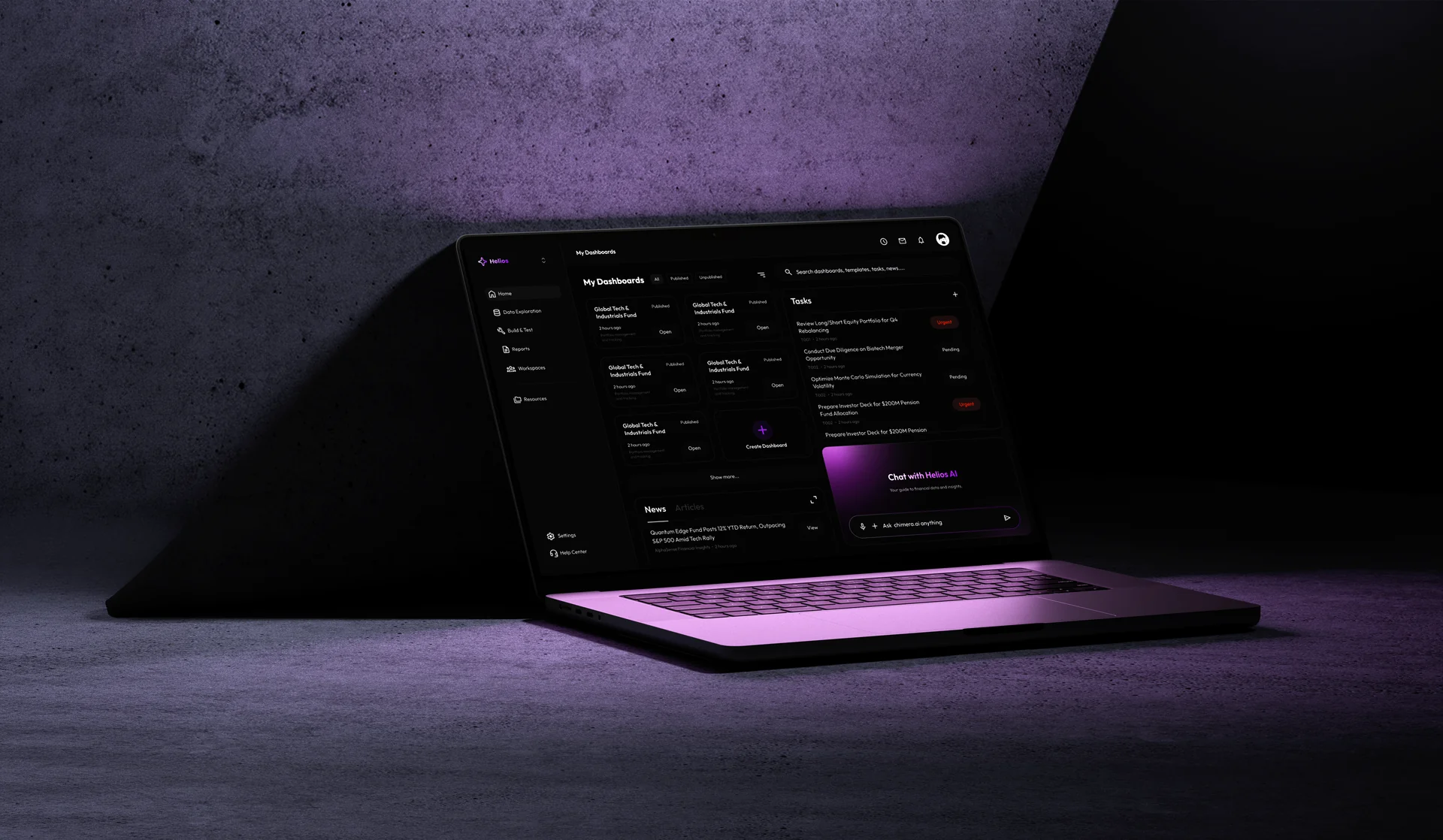
The brief gave me the What. Research had to uncover the Why.
For the DE Shaw selection task, the challenge was to design a next-generation financial platform that could help investment professionals create, test and share financial models more efficiently.
The brief covered a lot of ground: data, modelling, testing, collaboration and AI; and it quickly became clear that there wasn’t just one type of user or one way of working.
Before designing the platform, I needed to understand the people behind it.
I started with the people, not the interface.
I spoke over the phone with people working across data analysis, accounting and quantitative research. I also researched the financial ecosystem and existing tools to understand where their work begins, where it gets complicated, and where different roles depend on each other.
Different roles. Different tools. But the work was connected.
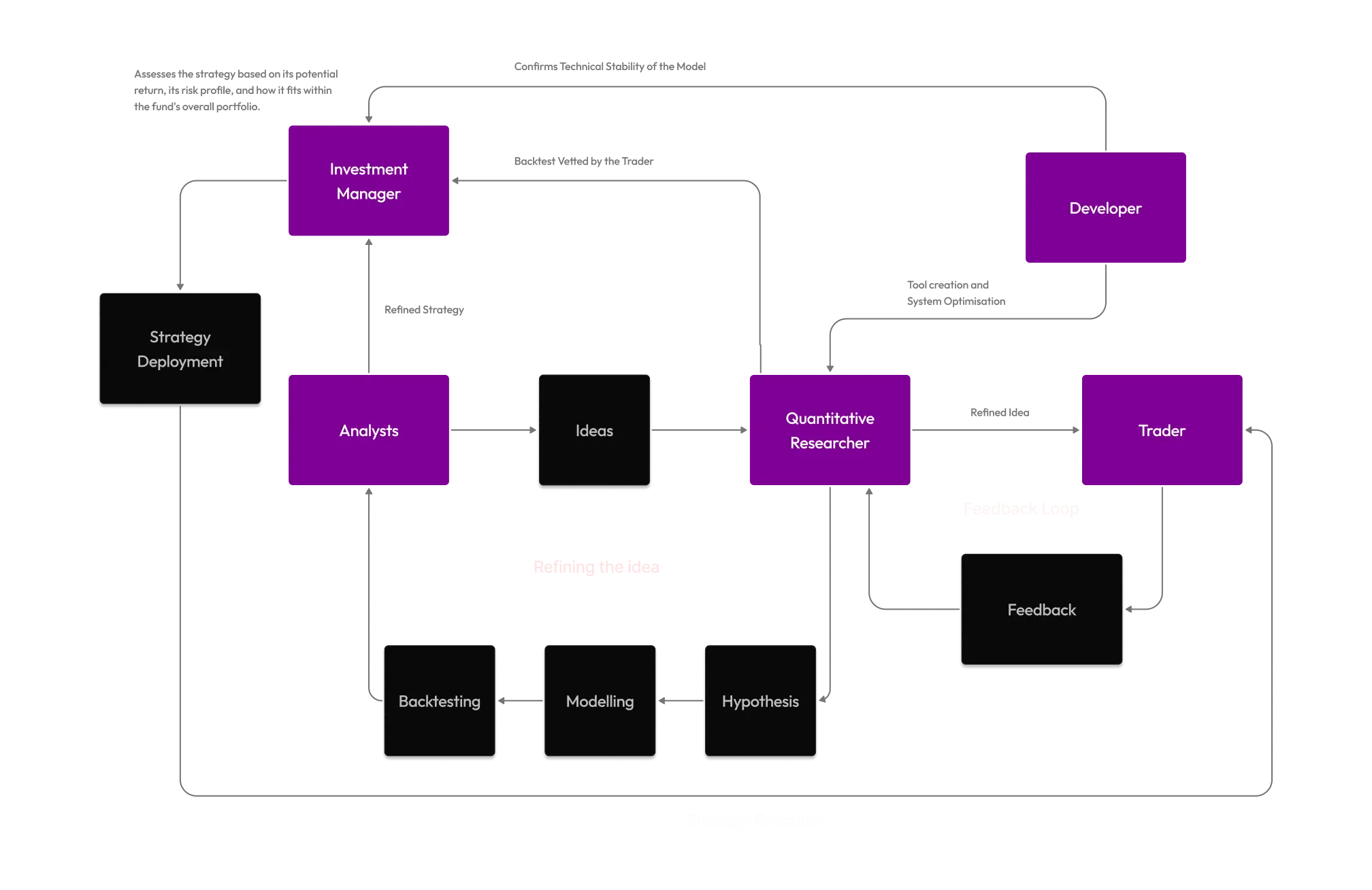
Conceptual model
The workflow was connected. The tools weren't.
The work moved through data, modelling, testing and review, but each stage often lived in a different tool. I saw an opportunity to bring that journey together without making every user work in the same way.
So I designed Helios as one workspace for the whole journey.
From bringing in financial data to building a model, testing it and sharing the result, the important parts of the workflow could now happen in one place.
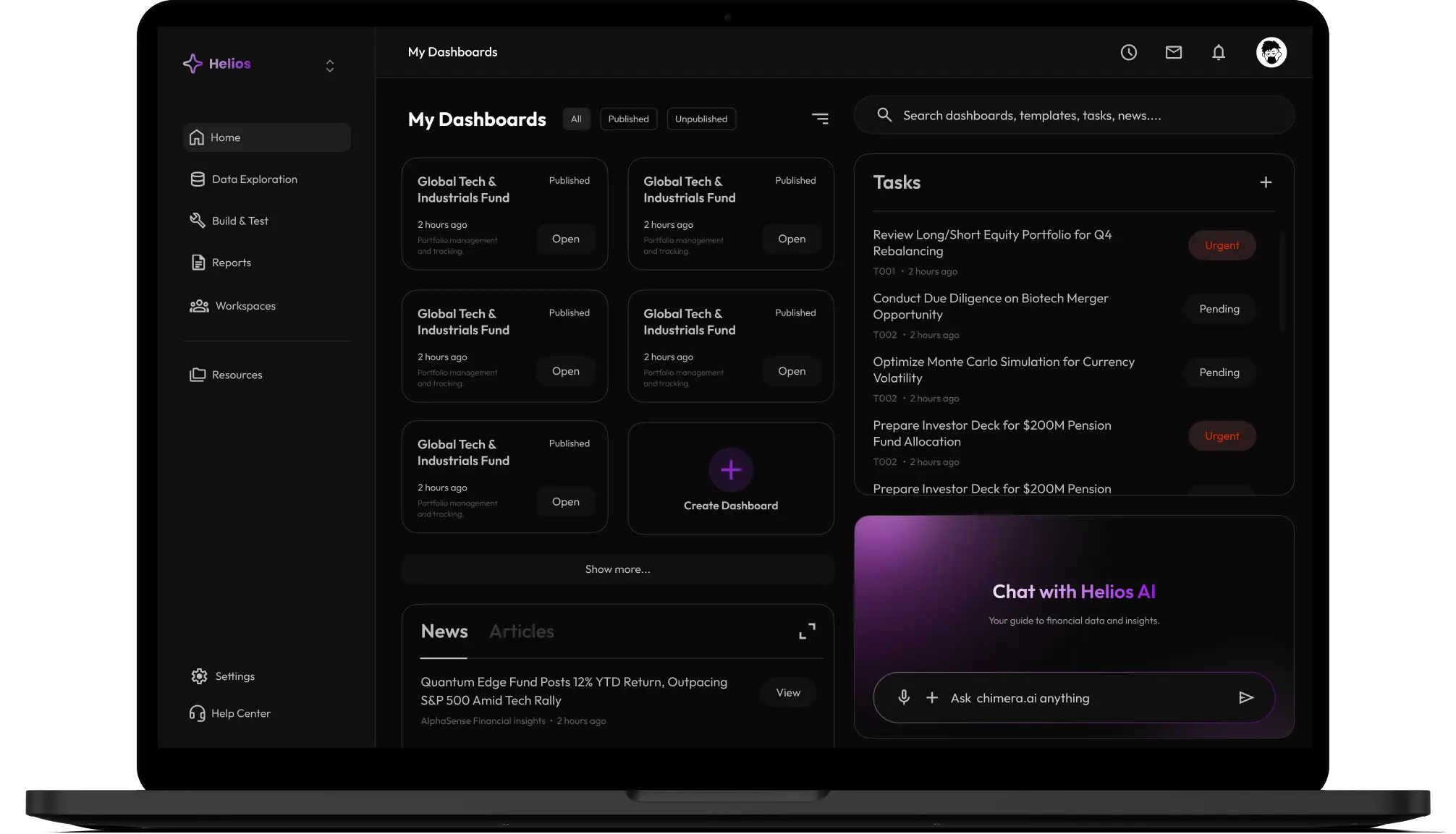
The interface had to work for people who think differently.
Analysts needed a visual way to work with models, while more technical users still needed the flexibility of code. So the modelling environment combines both instead of forcing one workflow on everyone.
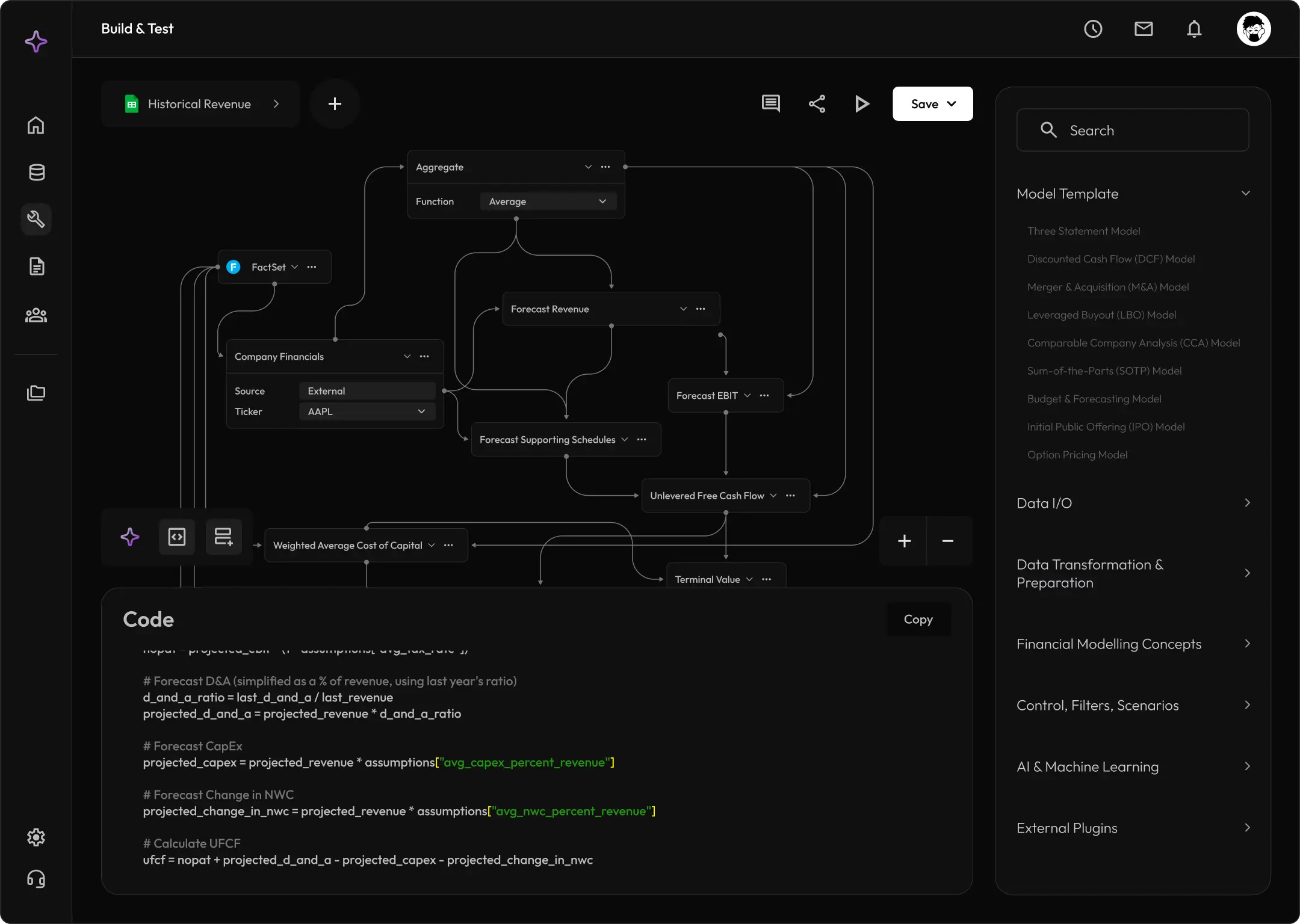
Visual node based tree strcuture for analysts and coding window for more technical users
A model is useful only when you can see what is happening inside it.
The node-based interface lets users build and modify financial models visually, while the graphs and outputs make it easier to understand what those changes actually do. Instead of moving between a spreadsheet, a modelling tool and a separate testing environment, the model and its behaviour could be explored together.
Building the model was only half the job. The results had to mean something to everyone else.
Helios turns model outputs into dashboards and reports that can be explored, compared and shared. This gives teams a common view of the results, so the work can move from testing an idea to discussing it and making a decision. The model stays connected to the insight, and the insight stays connected to the people making the decision.
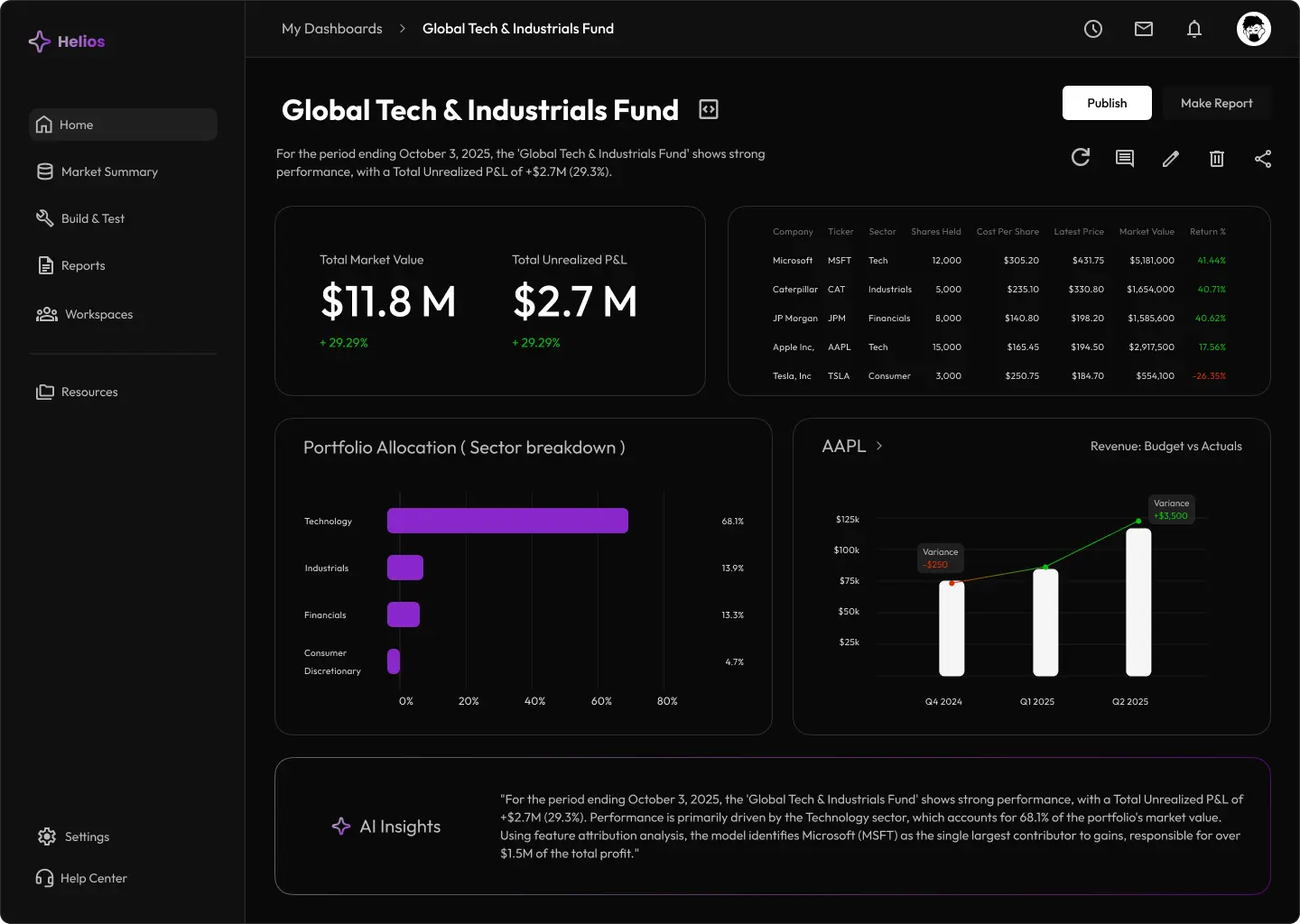
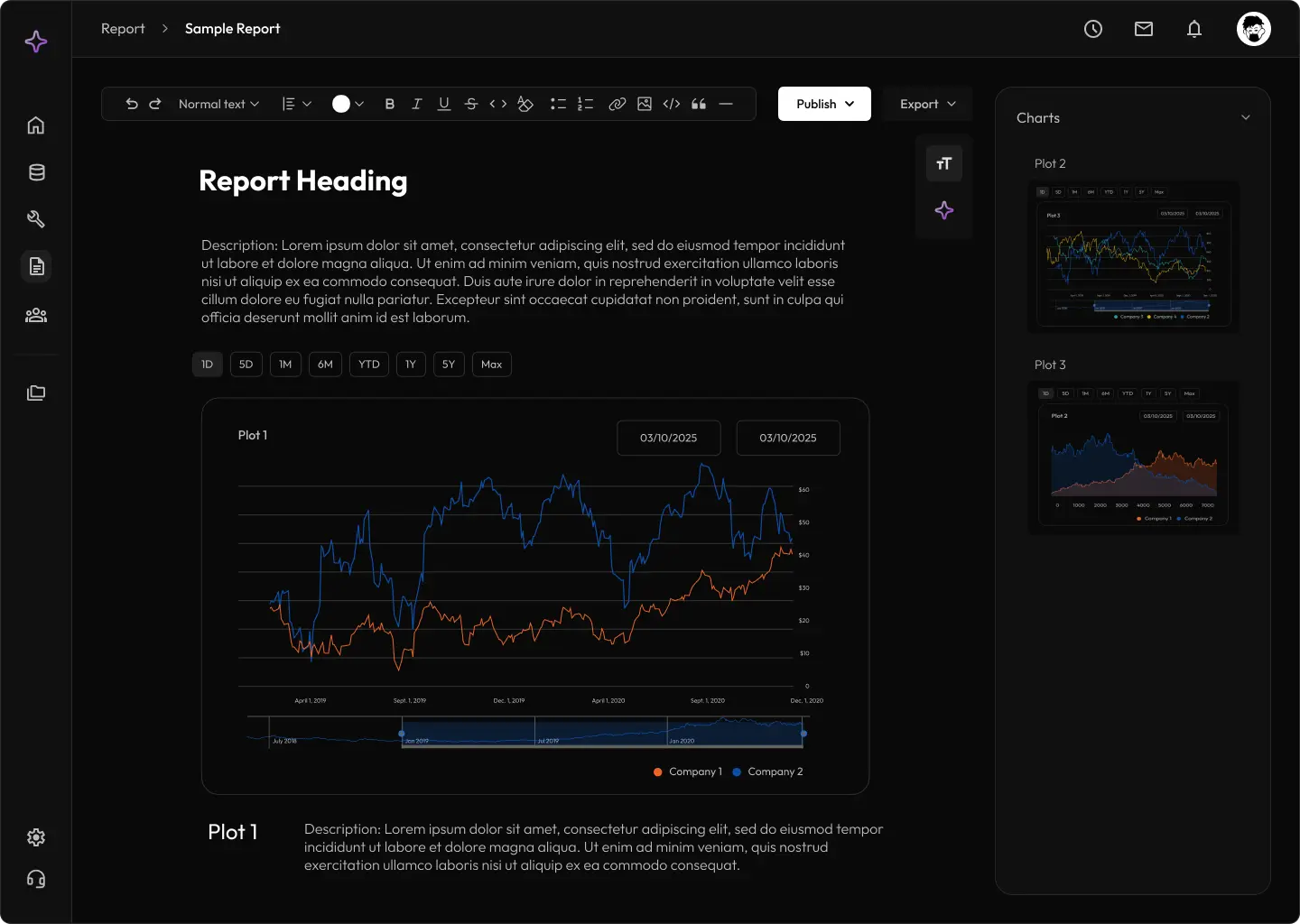
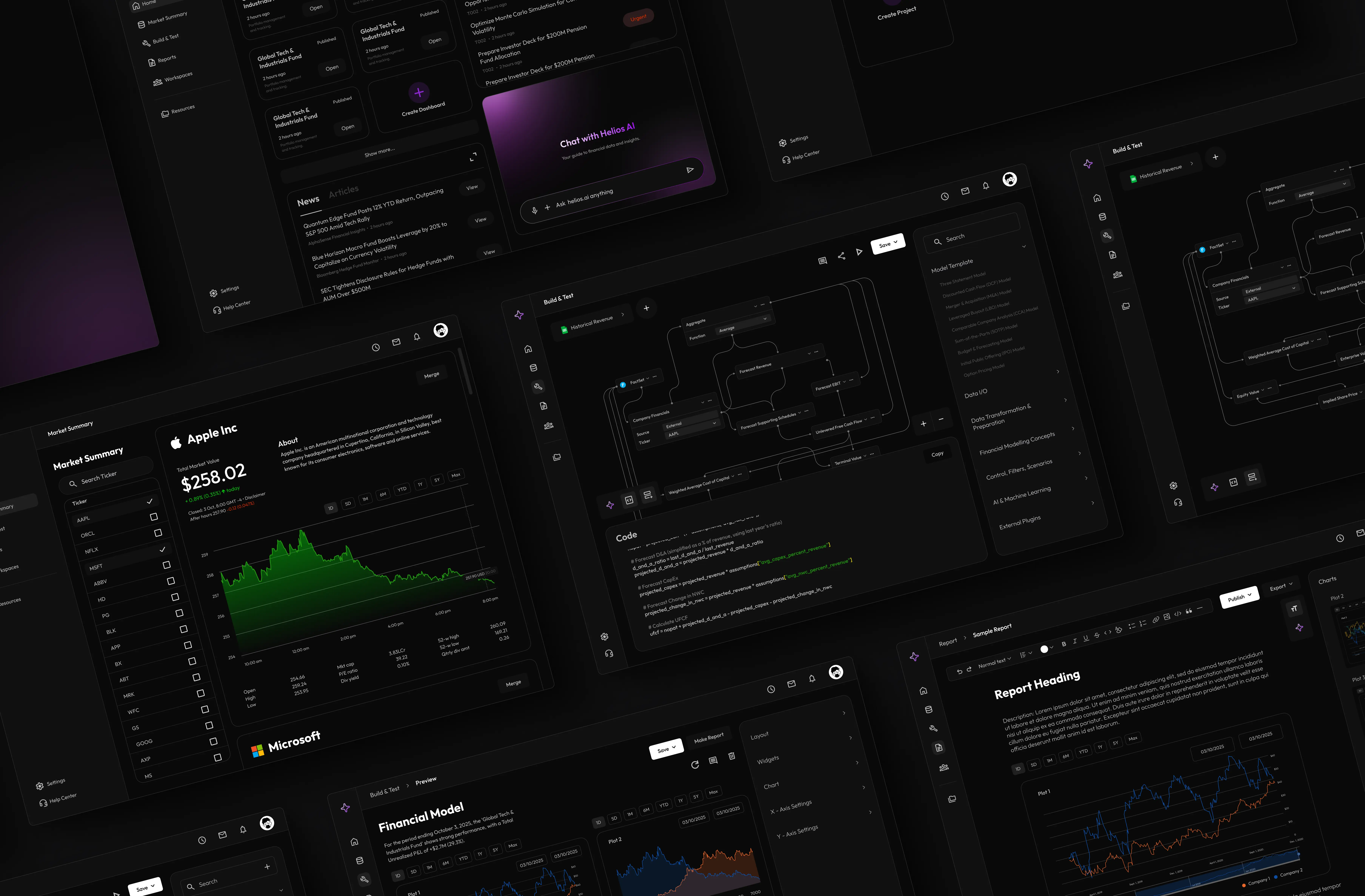
All of this comes together in one connected workflow.
Helios
Helios brings the journey from data to model, model to insight, and insight to decision into one place. Instead of treating each stage as a separate task, the platform keeps them connected so users can move through the work without losing context.
Data → Build → Test → Analyse → Share
That connection is what makes Helios more than just another financial modelling tool. It gives different people a common place to build on each other’s work and move an idea forward.
48 hours wasn't enough to solve everything. It was enough to find what mattered.
The time constraint pushed me to research quickly, make decisions early and stay focused on the core workflow. I couldn’t explore every possibility, so I chose the problems I could understand well enough to design for and carried that direction through to a complete product.
It also meant being comfortable with making decisions without having every answer. The interviews gave me enough context to understand where the real friction was, and from there I focused on building a clear, connected experience rather than trying to solve every part of the financial ecosystem at once.