Slide Out Desk
A workspace that gets out of your way when you need to.
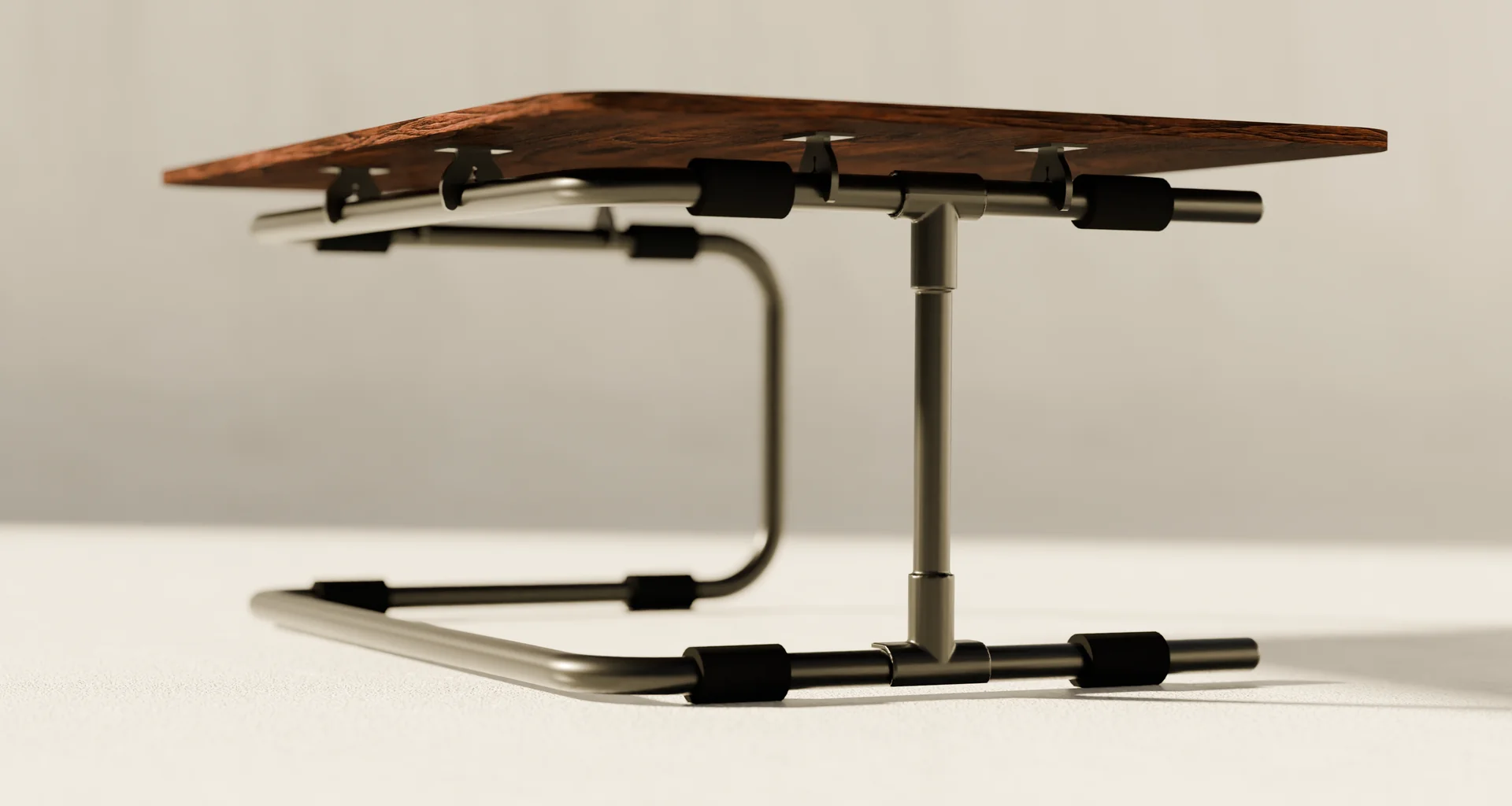
Getting up shouldn't mean packing up your workspace.
Working from bed is convenient until you need to get up. With a typical lap desk, even a short interruption means lifting or repositioning the whole workstation; along with whatever is sitting on it
What if the user could leave without disturbing the workspace?
The problem wasn’t really the work surface. It was the support around the user. I started looking at how the desk could create enough clearance for someone to leave and return, while keeping the tabletop and everything on it exactly where it was.
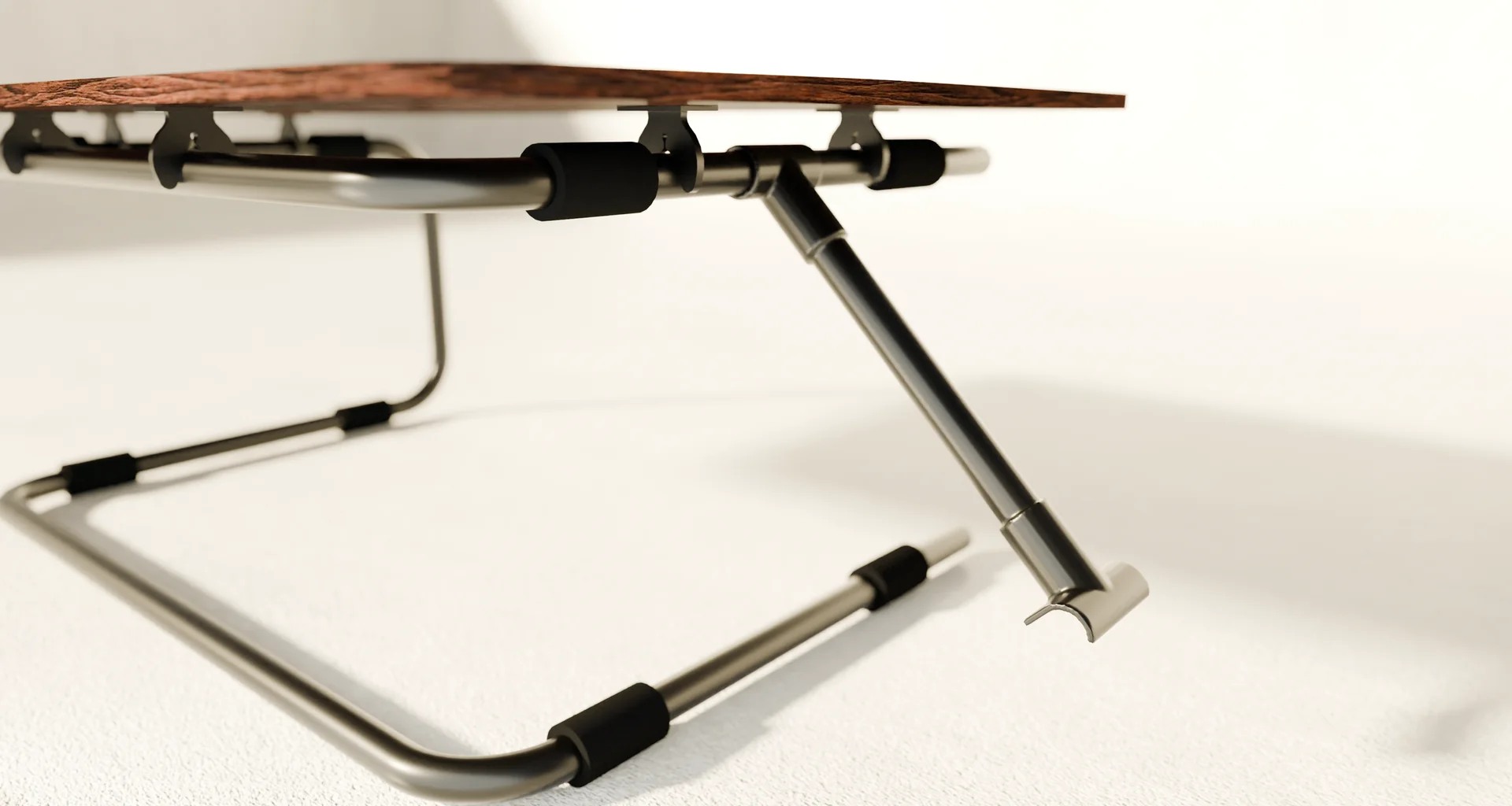
So instead of moving the desk, I moved the support.
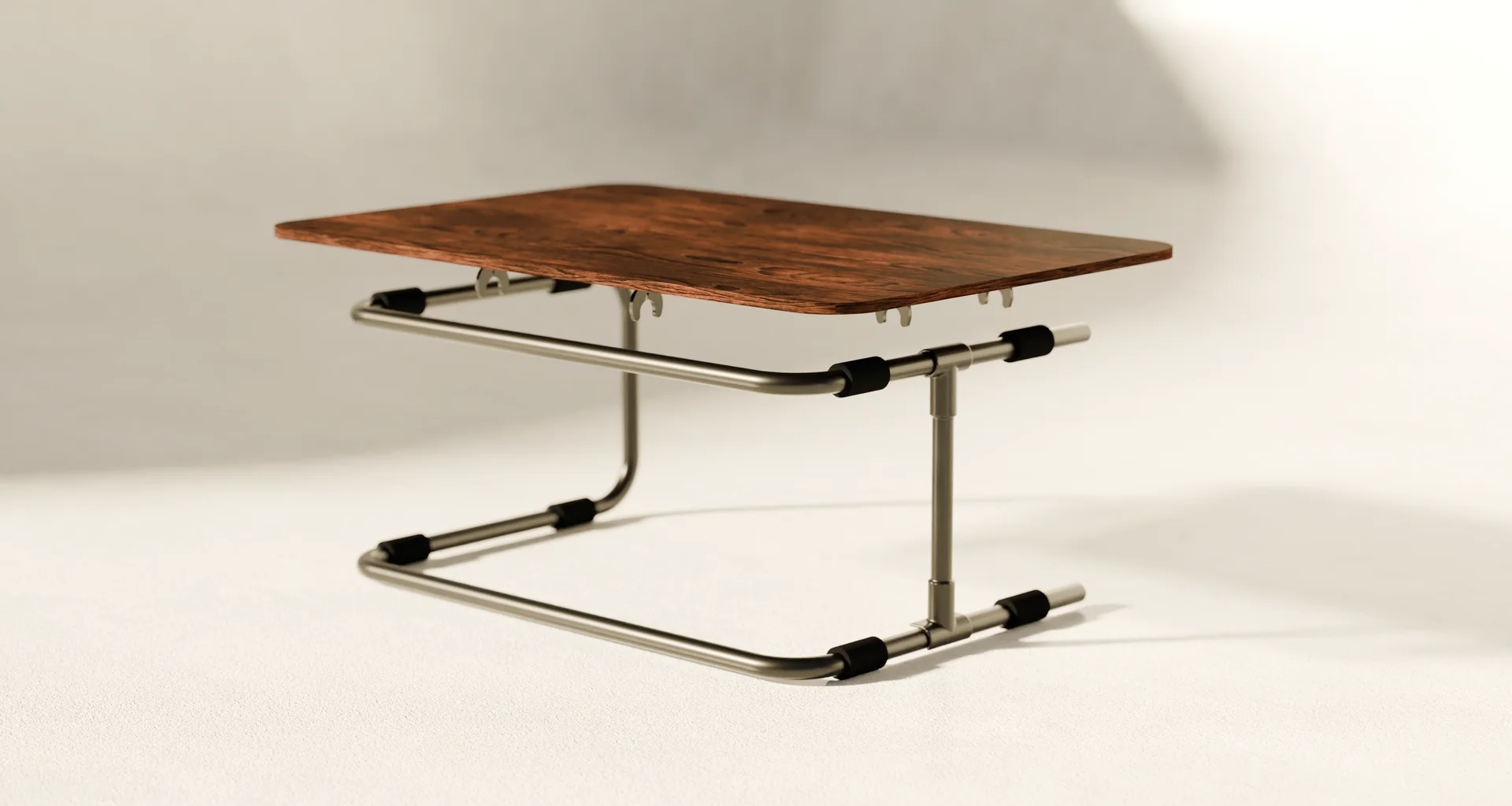
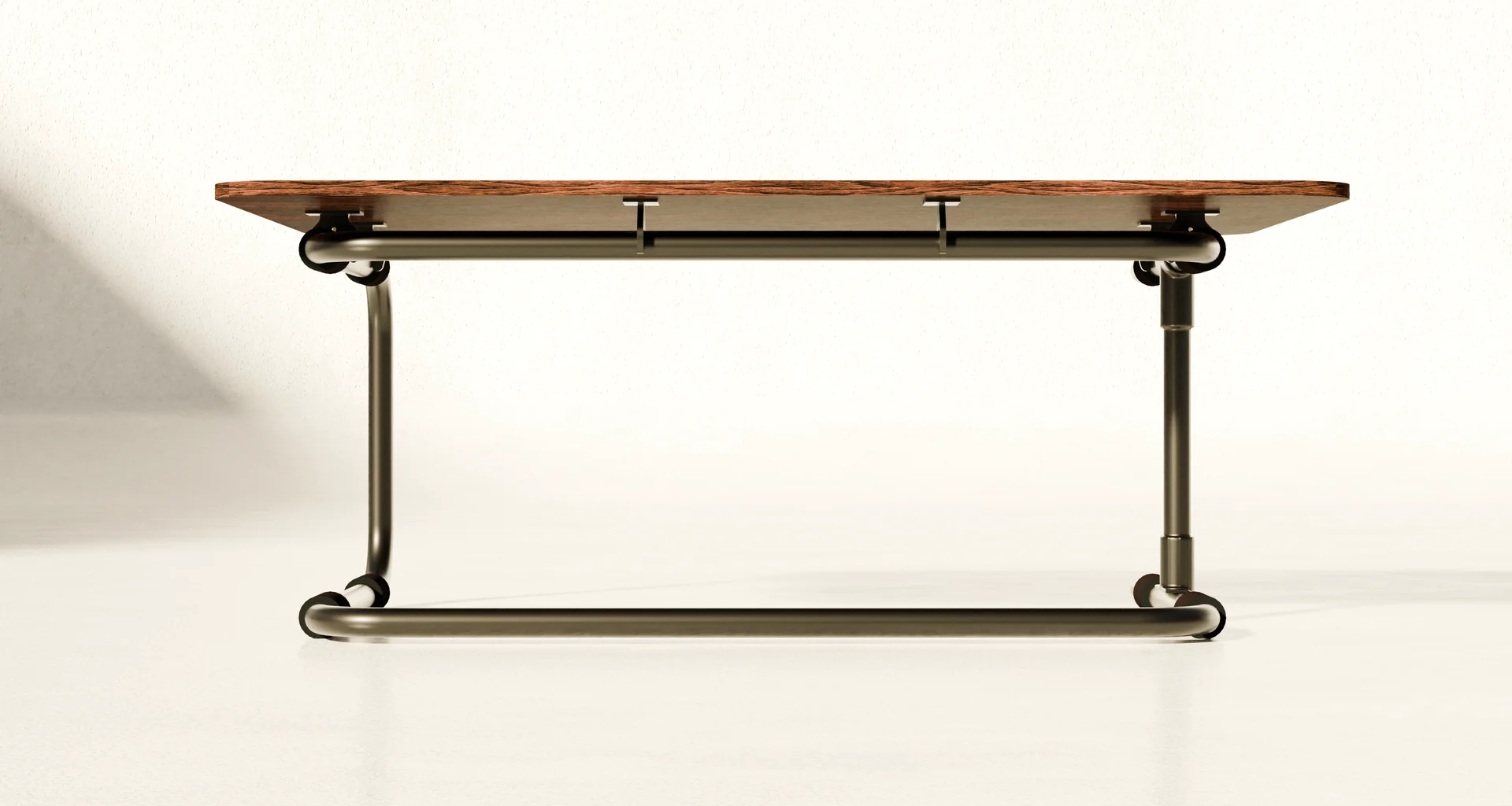
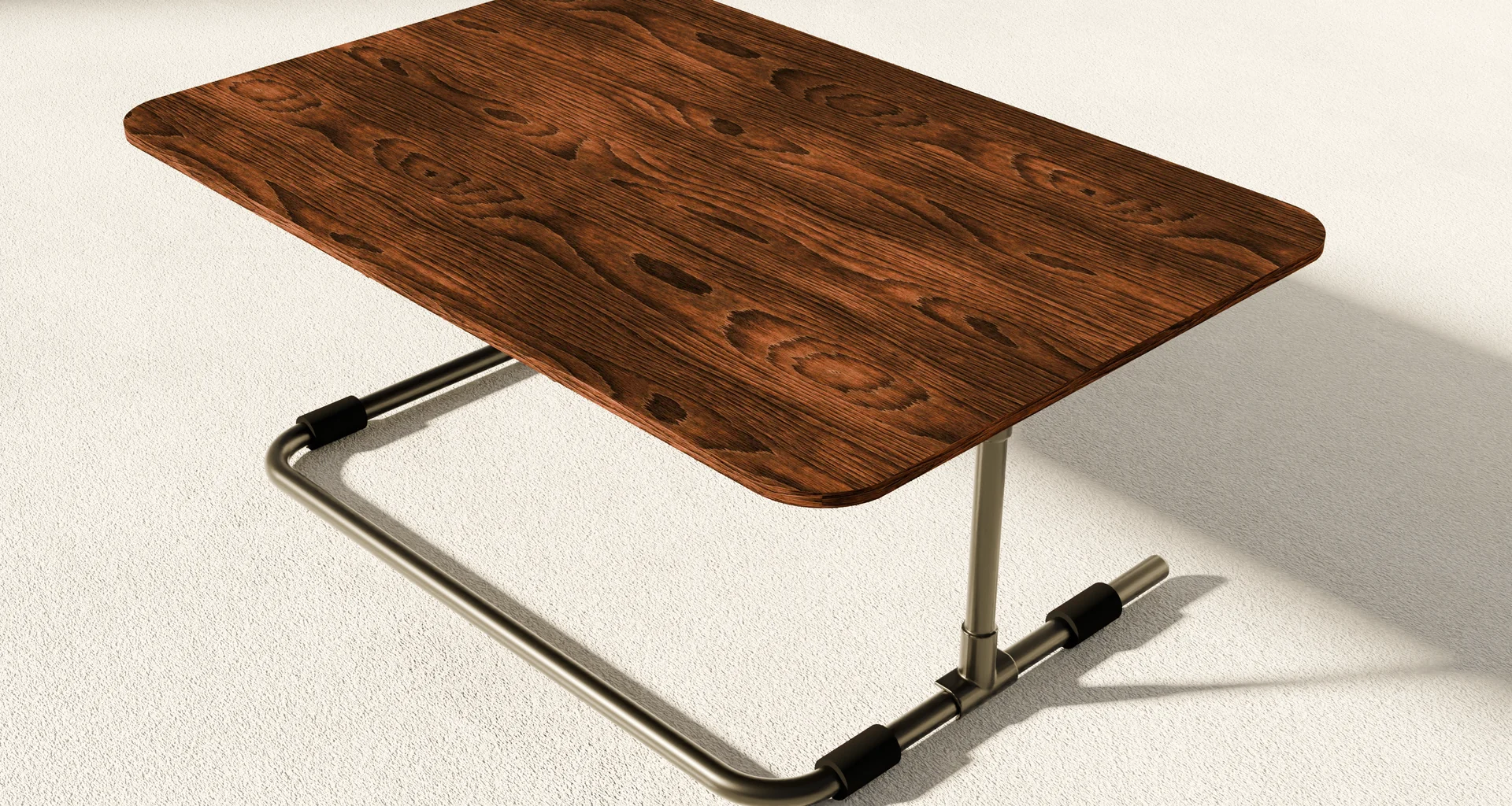
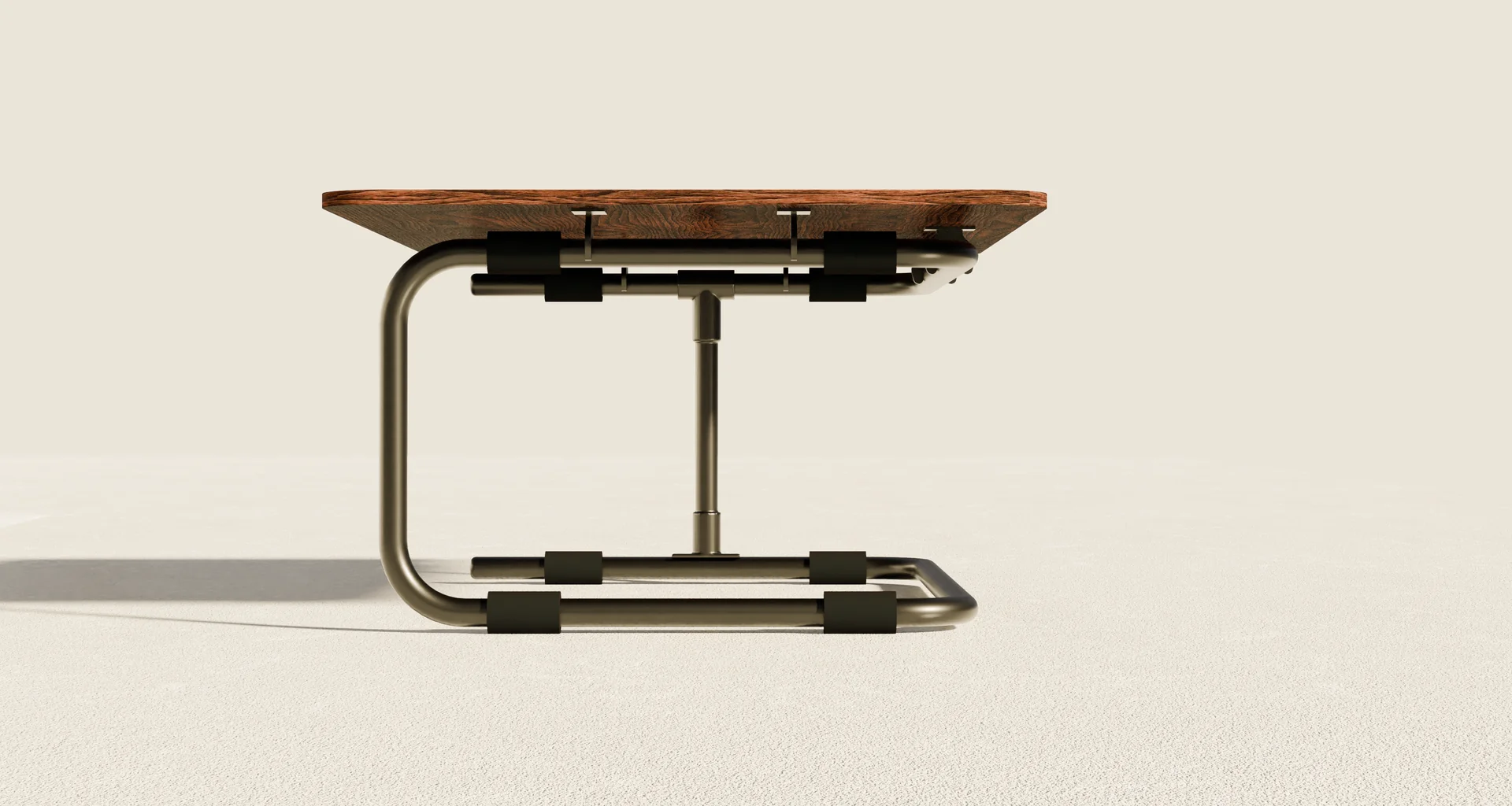
The desk stays in place. A passive support member rotates outward to create clearance for the user to get off the bed. Once the user is out, it returns toward its resting position and is held in place magnetically. Once the mechanism was resolved, the rest of the product had to support it without adding unnecessary complexity. A bent tubular frame provides the structure, while the tabletop and support assembly keep the product compact, reversible and practical to manufacture.
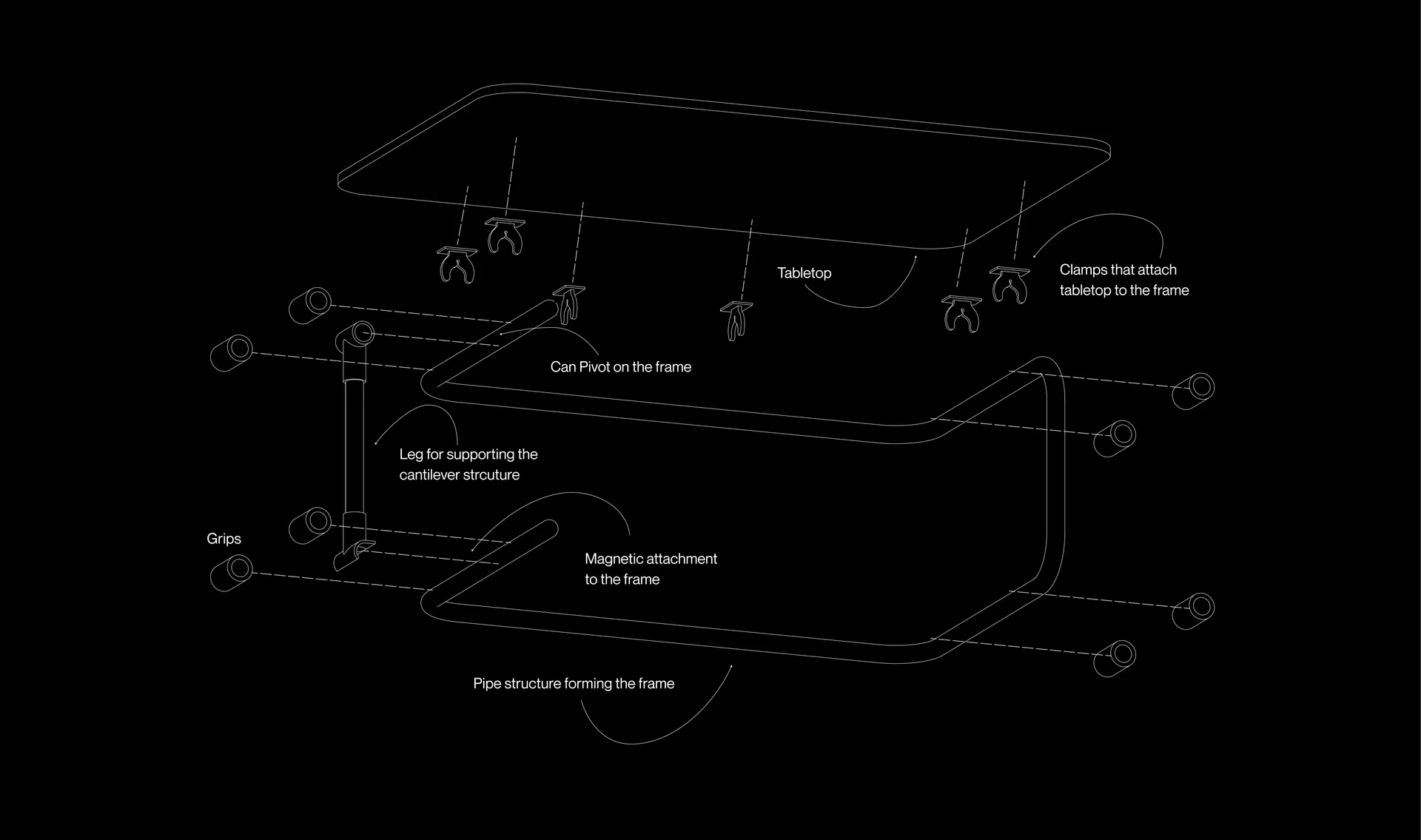
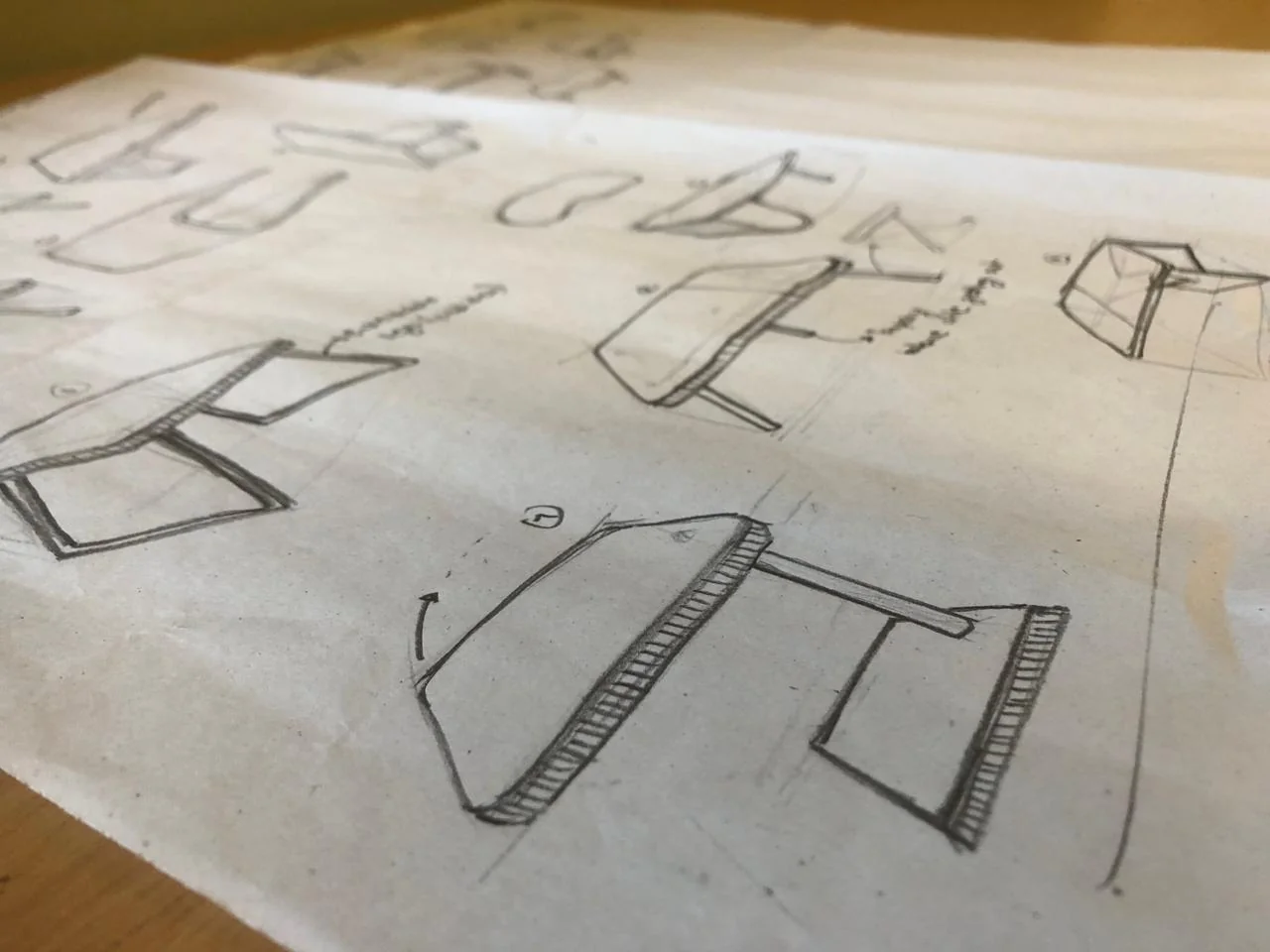
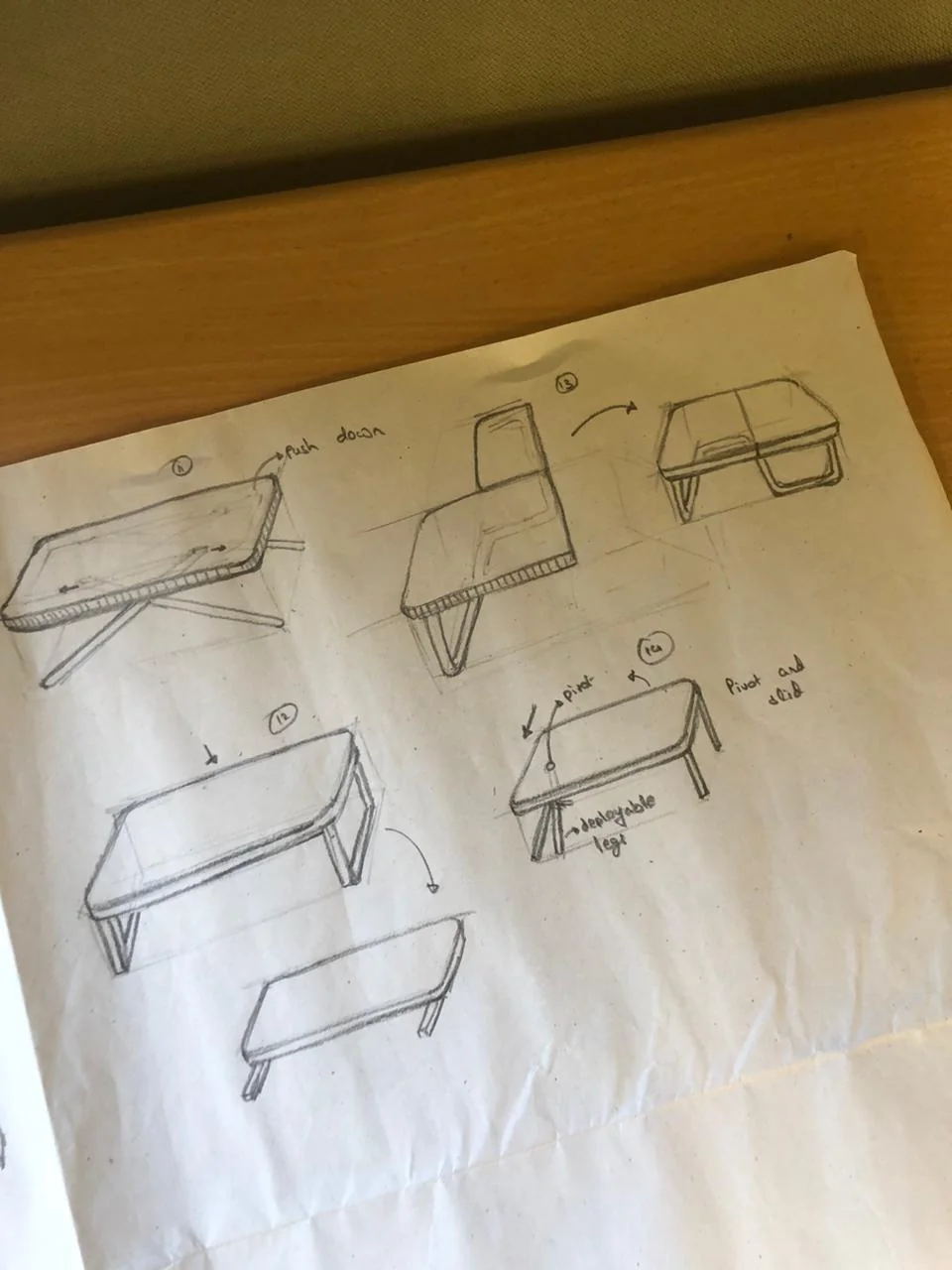
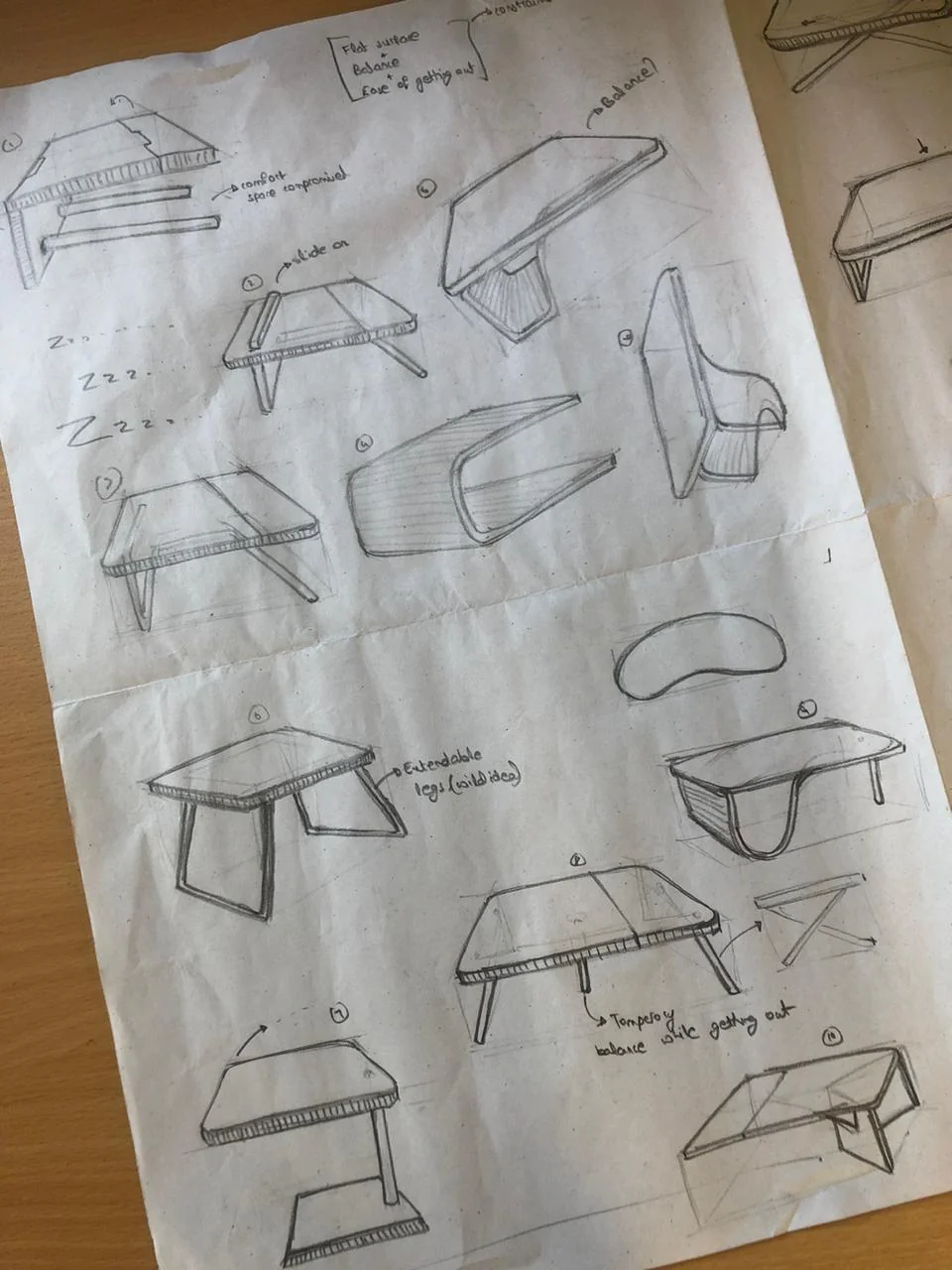
I took the project from exploring the limitation of existing bed-based workstations to developing the mechanism and product around it. The process moved through form exploration, mechanism studies, physical prototyping and refinement.
The idea had to work outside the sketchbook.
I built a physical prototype to understand how the frame, rotating support and tabletop would work together. It helped translate the mechanism from a drawing into something that could be physically moved, assembled and refined. The final form was kept deliberately simple around the mechanism. A bent tubular frame provides the structure, while the tabletop and support assembly keep the product compact and reversible. Standard fasteners and straightforward fabrication methods also keep the construction practical.
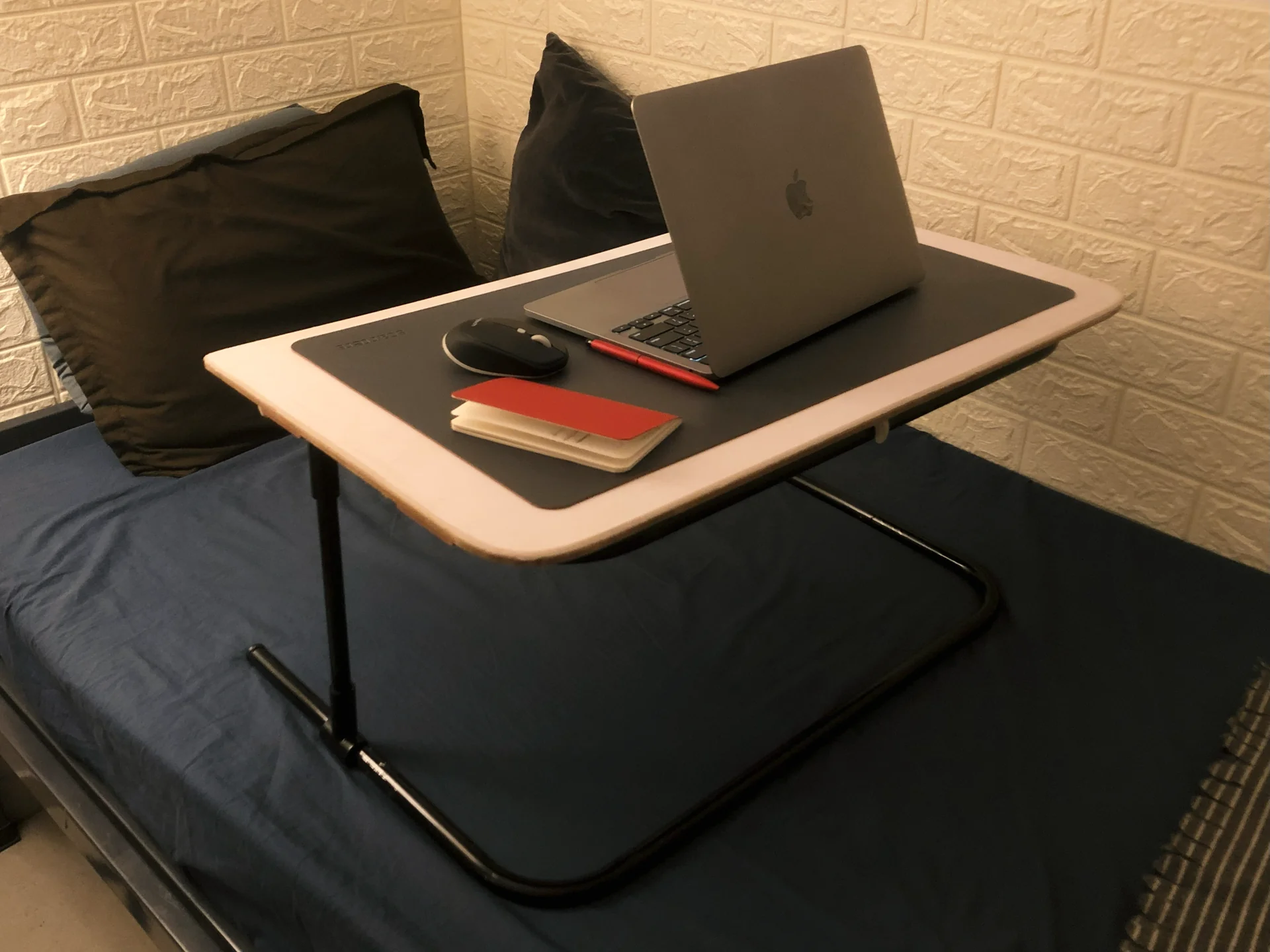
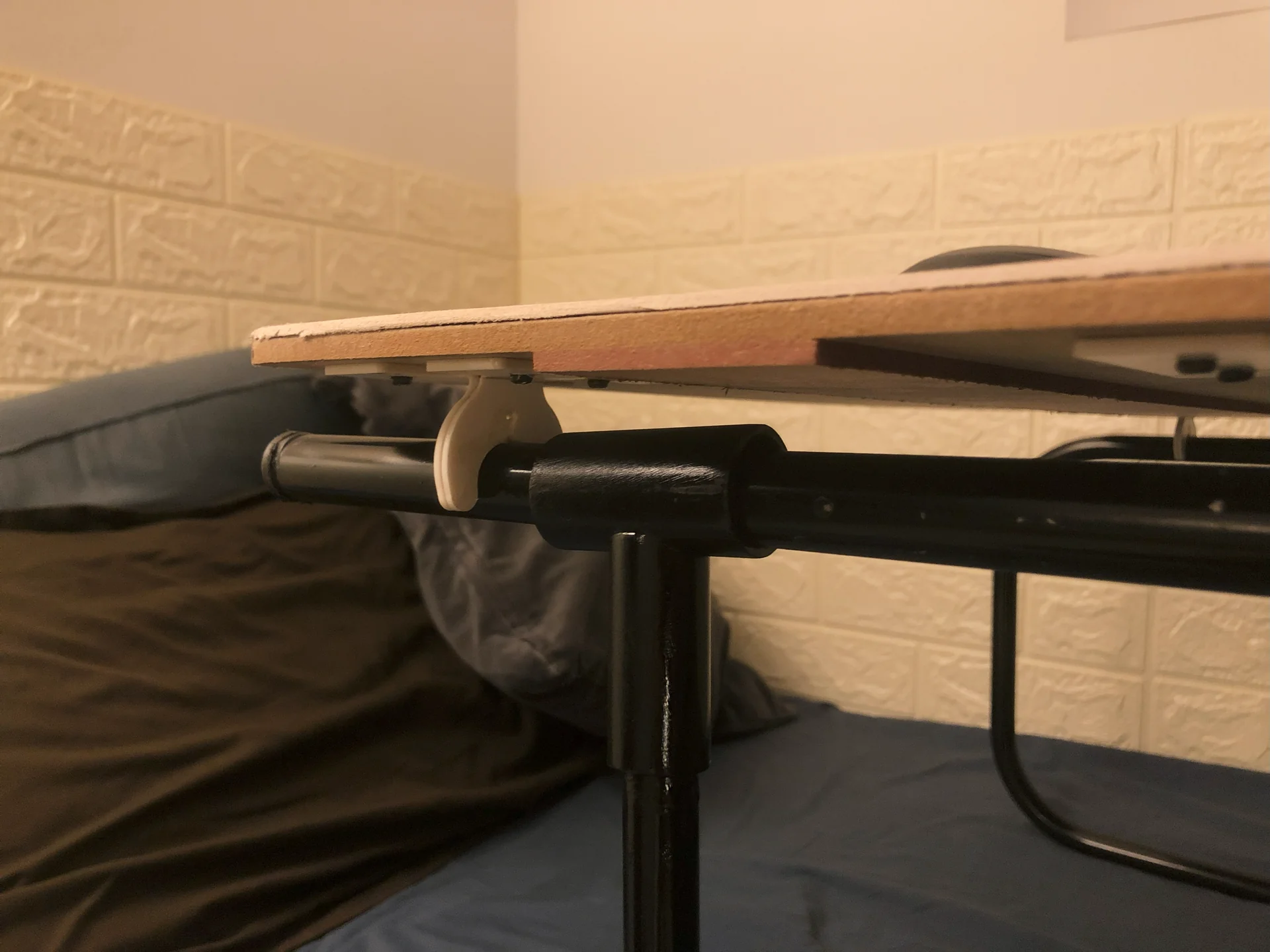
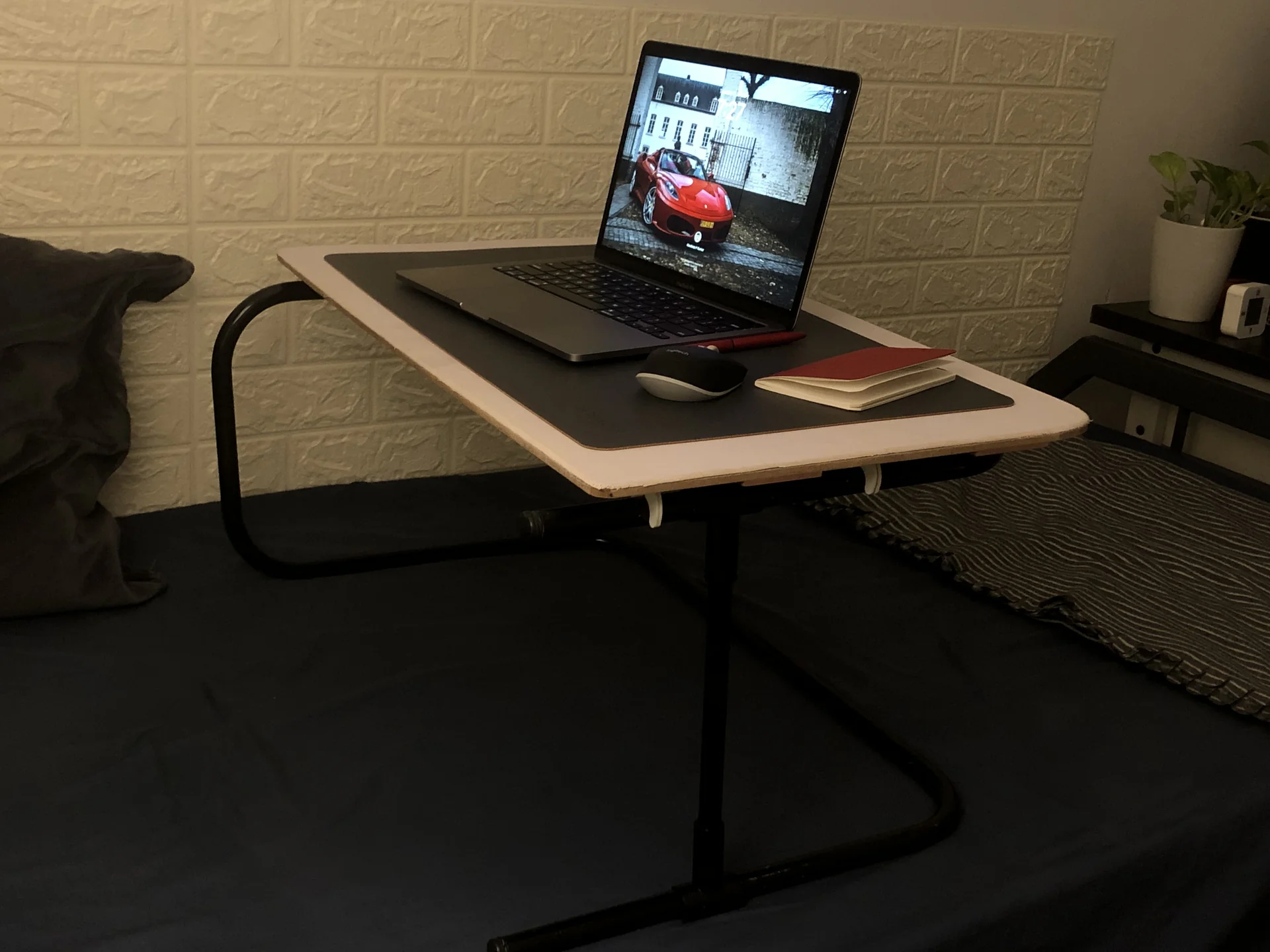
A small mechanism, built around a simple idea.
A small movement changes the entire interaction. Instead of lifting, moving and rebuilding the workstation, the user simply creates the clearance they need and comes back to the same workspace.
The interesting part wasn’t designing a desk. It was designing what happens when you stop using it.
The project made me look beyond the primary use of a product. A workstation is designed around the moment you’re working, but some of its most frustrating interactions happen in between — when you need to get up, move away and come back. Designing for that moment led to a much simpler question: not how to make the desk do more, but how to make it get out of the way.